
The 4 phases of the menstrual cycle, in color
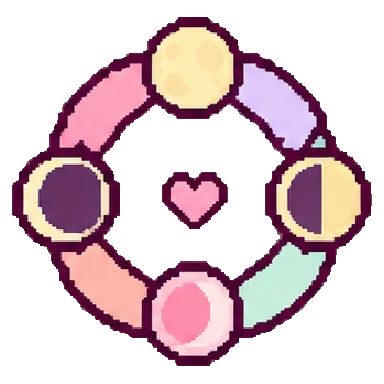
The menstrual cycle has four phases: the menstrual phase (your period, about days 1 to 5), the follicular phase (from day 1 until ovulation), ovulation (one egg is released, around 12 to 16 days before your next period), and the luteal phase (the 12 to 14 days after ovulation). Rising and falling estrogen and progesterone drive each one, and they often shape mood and energy too.
The four phases at a glance
Your cycle starts on the first day of real bleeding and ends the day before your next period. In adults a normal cycle is anywhere from 21 to 35 days, and only a minority of cycles are exactly 28 days long. Doctors split the cycle in two halves (the follicular and luteal phases, with ovulation in the middle) and the menstrual phase sits inside the start of the follicular phase. For everyday life, four phases is the most useful way to see it.
Use the colors as a rough map, not a timetable. Your own phases move with your cycle length, and how you feel in each one is personal. Our what phase am I in tool gives you an estimate for today.
What your hormones do in each phase
Four hormones run the show. Two come from the brain (FSH and LH, made in the pituitary gland) and two from the ovaries (estrogen and progesterone). They talk to each other in a loop, which is why the cycle repeats.
| Phase | Estrogen | Progesterone | FSH / LH | What's happening |
|---|---|---|---|---|
| Menstrual | Low | Low | FSH starts to rise | Lining sheds; new follicles are recruited |
| Follicular | Rising steadily | Low | FSH, then falls as estrogen rises | One follicle grows; lining rebuilds |
| Ovulatory | Peaks just before ovulation | Starts to rise | LH surge (and an FSH bump) | Egg is released 24 to 36 hours after the LH surge begins |
| Luteal | Dips, then a second smaller rise, then falls | Peaks about a week after ovulation, then falls | Low | Corpus luteum makes progesterone; lining gets ready for a possible pregnancy |
If no pregnancy happens, the corpus luteum (what's left of the follicle after ovulation) shrinks after about two weeks. Progesterone and estrogen drop, the lining can no longer hold, and your period begins: day 1 again. For the full picture, see our simple guide to menstrual cycle hormones.
How long is each phase?
The phases are not equal, and they are not fixed. In a study of more than 600,000 cycles tracked in an app, the average cycle was 29.3 days, the average follicular phase was 16.9 days (but anywhere from 10 to 30 days), and the average luteal phase was 12.4 days (usually 7 to 17). The key point: when a cycle is longer or shorter, it's mostly the follicular phase that changes. The luteal phase stays steadier.
| Phase | Typical length | What makes it vary |
|---|---|---|
| Menstrual | 2 to 7 days, usually about 5 | Your usual flow, contraception, fibroids, age |
| Follicular (includes your period) | About 10 to 22 days, often 14 to 17 | Stress, illness, travel, PCOS, age: the main reason cycles change |
| Ovulatory | The egg lives 12 to 24 hours; the fertile window is about 6 days | When the LH surge happens |
| Luteal | About 12 to 14 days, 10 to 17 is common | Fairly stable; under 10 days is worth discussing with a doctor |
That's why day 14 is only ovulation day for some people. NHS guidance puts ovulation about 12 to 16 days before your next period, whatever your cycle length. More detail in how long each phase lasts.
How mood and energy change through the phases
This is the part most people feel first. Hormones affect brain chemicals like serotonin and GABA, sleep, body temperature and appetite, so it makes sense that many people notice a rhythm in how they feel. But research is honest about one thing: the pattern is personal. A review of 47 prospective studies found that over a third saw no link between mood and cycle phase across whole groups of people, while many others did. Some people feel a strong luteal dip, some feel low on their period, and some barely notice.
| Phase | Often reported mood | Often reported energy |
|---|---|---|
| Menstrual | Relief, inward, tender, sometimes low | Lowest; cramps and blood loss add to tiredness |
| Follicular | Lighter, optimistic, curious | Rising day by day |
| Ovulatory | Social, confident, flirty; a short wobble for some | Peak for many |
| Luteal | Calm early on; irritable, anxious or teary in the last days | Steady, then dropping before your period |

The table above is what many people report, not a rule. After a couple of cycles of one-tap check-ins, Lulu shows how you usually feel on each cycle day, and how often that held true.
Phase by phase, in a little more depth
1. Menstrual phase: rest is productive
Falling progesterone triggers prostaglandins, chemicals that make the uterus contract to shed its lining. That's what causes cramps, and sometimes looser stools or a headache. Most people lose 20 to 90 ml of blood (about 1 to 5 tablespoons). If your periods are heavy, iron-rich food matters more now. Read the full guide to the menstrual phase.
2. Follicular phase: energy coming back
Once bleeding eases, rising estrogen rebuilds the uterine lining and tends to lift energy and mood. Skin often looks clearer and many people feel more motivated. It's a good window to start new things. See the follicular phase guide.
3. Ovulation: the short, bright middle
Estrogen peaks, cervical mucus turns clear and stretchy, and an LH surge releases the egg. Some people feel one-sided pain, and basal body temperature rises slightly afterward. Sex drive often peaks here. See the ovulation phase guide.
4. Luteal phase: feelings get louder
Progesterone warms you up (by about 0.3 to 0.5 °C), can make you sleepier, and slows digestion. In the last 5 to 7 days, both hormones fall and PMS can appear: mood swings, cravings, sore breasts, bloating. Over 90% of people who menstruate report at least some premenstrual symptoms. See the luteal phase guide.
What changes the phases
- Hormonal contraception: most pills, implants and hormonal IUDs reduce or stop ovulation, so the four phases don't happen in the same way. A pill bleed is a withdrawal bleed, not a true period.
- Age: teens and people in perimenopause often have longer, more variable cycles. Cycles also tend to get slightly shorter through your late 20s to 40s.
- Stress, illness, travel, under-eating or very hard training can delay ovulation, which lengthens the follicular phase.
- PCOS, thyroid conditions and breastfeeding can make ovulation irregular or pause it.
- Pregnancy: if an egg is fertilized and implants, progesterone stays high and there's no period.
When to see a doctor
Talk to a doctor if your cycles are often shorter than 21 days or longer than 35, if your periods stop for 3 months or more (and you're not pregnant), if you bleed between periods or after sex, if bleeding is very heavy, or if pain or mood changes before your period disrupt work, school or relationships.
Frequently asked questions
What are the 4 phases of the menstrual cycle in order?
Menstrual (your period), follicular (estrogen rises and a follicle grows), ovulation (an egg is released) and luteal (progesterone rises, then falls before your next period).
Which phase of the menstrual cycle is the longest?
Usually the follicular phase, which includes your period and averages around 17 days. It is also the phase that varies most from cycle to cycle.
Which cycle phase makes you emotional?
For many people it's the late luteal phase, the last week before a period, when estrogen and progesterone fall. But patterns vary: some people feel lowest on their period. Tracking shows your own.
Do you still have cycle phases on the pill?
Not in the usual way. Combined pills stop ovulation, so hormones stay fairly steady and the bleed on your break week is a withdrawal bleed.
What phase am I in if my period ended 3 days ago?
Most likely the follicular phase. Ovulation usually comes 12 to 16 days before your next period, so on a 28-day cycle it's often around day 13 to 15.
Sources
- Cleveland Clinic: Menstrual Cycle (Normal Menstruation): Overview & Phases
- NHS: Periods
- Bull JR et al. Real-world menstrual cycle characteristics of more than 600,000 menstrual cycles. npj Digital Medicine (2019)
- Romans S et al. Mood and the menstrual cycle: a review of prospective data studies. Gender Medicine (2012)
- Office on Women's Health: Premenstrual syndrome (PMS)
This page is for information only and isn’t medical advice. If something worries you, please talk to a doctor.
Keep reading
What phase of my cycle am I in? Free phase finderWhat phase of my cycle am I in? Enter your last period to see your cycle day, today's phase and how people often feel in it. Private and instant.Menstrual cycle hormones: a simple chart of what rises and fallsMenstrual cycle hormones explained simply: how estrogen, progesterone, LH and FSH rise and fall through each phase, and how they shape mood and energy. How long is each phase of the menstrual cycle?How long each phase of the menstrual cycle lasts: period, follicular, ovulation and luteal phase lengths, what's normal, and why your cycle length changes.
 Your menstrual cycle day by day (day 1 to 28 and beyond)Your menstrual cycle day by day: what happens to hormones, body and mood on cycle day 1, day 14, day 21 and every day in between, plus longer cycles.
 Menstrual cycle mood: how you feel in each phase, and whyHow menstrual cycle mood changes through all four phases: what hormones do, why some people feel it more, and how to learn your own pattern.How long is a normal menstrual cycle?How long is a normal menstrual cycle? Anywhere from 21 to 35 days in adults. What's average, how much variation is fine, and when to see a doctor.